Showing posts with label performance enhancement. Show all posts

Wednesday, January 25, 2012

13 year old, female weightlifting champ

I love this story for a bunch of reasons (please forgive any opening ads).

  1. It kills the common female excuse against weightlifting, “but, I do not want to get big, disgusting muscles.” This teenager looks very fit to me.
  2. She is on a Paleo diet.
  3. She keeps trying to best her personal records.
  4. She is intense, calm, disciplined (MWF at 0530???) and uses a great coach.
  5. Eight weightlifting world records. EIGHT.

Her key element to success according to her coach: “she hasn’t been told for decades that she is limited.” What perceptions, attitudes and assumptions are limiting you?

Your goal for your next workout? Add 5-10 more pounds to every exercise you do. Run 10% longer and 10% faster. Swim 2 extra laps. Just increase something.

You will thank me. I guarantee it.

Thursday, May 19, 2011

Poison fat

Why does training with a weight vest, ankle weights or doing exercises like a farmer’s walk make your body build more muscle while being fatter does not? In all these examples, your body is carrying around extra weight all day. However, overweight and obese people do not seem to gain extra muscle to compensate for it. What is going on here?fat%20rat1

In a study detailed in the NY Times, it was found that extra fat may be inhibiting muscle development. This was a great study that involved attaching lead weights to moths and making rats chubby. I would have loved to have been involved in this one.

Fat is not a passive tissue. It actually secrets hormones and affects how the body works. The initial findings suggest that the extra fat weight is not only an anchor you are dragging behind you. It is also a “anesthetic” for muscle development.

One of the best theories for why this is the case was found in the comments section of the article:

…in nature, there was no need to correct or compensate for this... If an animal was this obese, it would be easy prey for a carnivore since it could not move effectively. At the same time, nutrition is more scarce in the wild, and obese animals do not exist on the whole.

Therefore, nature never had to come up with a mechanism for dealing with "what happens when we get too fat for our muscles to compensate." It is simply a scenario that nature never encountered. As a result, there was no evolutionary pressure to develop a compensatory response.

Moral: stop working so hard at the gym or on the road if you are not going to address the extra junk that is holding you back. Check your cabinets and plates. That might be what is holding you back from your next personal performance record.

Saturday, November 13, 2010

Two months of Insanity

About 60 days ago, I started the Insanity workout DVD series produced by Beachbody. They make multiple home workout programs that you probably have seen on television on infomercials after 11 p.m.

I just finished the whole series, and I wanted to give an update on my results and my commentary about it.

  1. The workout program is one of the hardest in which I have ever participated. It involves six days per week of total body conditioning using no equipment other than your own bodyweight. It could be best described as high intensity and impact interval training with a heavy plyometric component. Think about it as a mix of traditional calisthenics, football practices and military training.
  2. I have been a traditional “gym rat” that participated in free weight resistance training along with cardiovascular machines (elliptical, stationary bike, etc.). This workout changed my body shape and did result in significant improvements in my overall fitness.
  3. Surprisingly, even though I only performed weight training once per week during the series, my weights on all free weight exercises increased 15-20%. I attribute this to the high emphasis of the program on core strength, neuromuscular improvement and synergistic muscle development.
  4. I noticed a definite improvement to my posture, flexibility and muscular endurance.
  5. My knees and legs need a rest from all the jumping over the past 60 days.
  6. My body shape changed. I am leaner and don’t feel as muscle-bound.
  7. I would recommend this workout to anyone that is able, but there are a great number of people who are probably not ready for this workout if they do not have an established level of fitness.

The skinny: try this workout if you need a change of pace. I am looking forward to getting back to my traditional workouts for the next few weeks. However, I will continue to supplement my routine with these workouts from time to time because the results were fantastic.

Tuesday, September 21, 2010

Taking a week off isn’t so bad

I am currently on the plane returning from vacation in Ireland. It is the first full week off work I have taken in quite some time. It is also the first time I have not worked out for six days since I probably was about 14 years old.

I had the best of intentions. I brought five days worth of workout clothes, running shoes and exercise DVDs. I set my alarm. I even took it easy some nights (not many) and came home from the pubs at a reasonable hour.

However, after a couple of days, my body actually felt a little better than it did last week when I was sometimes exercising twice a day. I’m not exactly at my best, but I think with a few days of getting back into my routine, I will be better than before.

The mind needs a rest from routine sometimes. The body needs a break from the abuse. And, its nice to know you can turn the discipline/intensity off and then back on again.

That’s the true sign of dedication as opposed to obsession. So, give yourself a break every now and then. Just don’t do it TOO often.

Thursday, June 17, 2010

Volume turned up to 11

Remember the famous scene from the mockumentary, Spinal Tap, where the guitarist  talks about how his amp’s volume controls go up to 11?

You should be thinking about your workouts in the same way. Many people have set levels in their mind as to what their maximum effort might be. You need to periodically reset these levels “to 11” every now and then if you are going to continue to make gains. Watch the video and think about what Christopher Guest’s character says.

What do YOU need to do to push your workout a little bit over the top? You can do the same workout with the following changes:

  • Reduce your rest time from 60 seconds to 45 seconds between sets.
  • Perform a bodyweight exercise in between sets (alternate 30 pushups and 30 crunches)
  • Add three sets of plyometrics at the end of the workout to finish it off.
  • Do antagonistic exercises (e.g., bench press and lat pulldown) back to back with no rest, then rest 30 seconds, repeat
  • Add 5% more weight than last time
  • Add one more rep per set

There are a limitless array of variations to what you can do to your workout to turn up your workout amp to 11. Try to keep the training time the same, but compress more effort into the workout.

Friday, June 04, 2010

Are you fit enough---to be a ref?

It is almost World Cup time, and that means I will have no idea which team will win or why this sport over any other mesmerizes the entire world---except the United States. From what I have seen, it certainly is filled with some of the most fit athletes on the planet.

However, according to research, it is the referees that actually run more than anyone else on the pitch (upwards of 12 miles per game). To make sure these officials can keep up with the likes of Cristiano Ronaldo, FIFA instituted a strict policy, which I have quoted from an article:

In 2007, FIFA ramped up its referee training by launching its Refereeing Assistance Program to prepare the candidates for 2010.

Because referees have to keep up with the speed of the game, they are subjected to two fitness tests to mimic the action on the soccer field. They are given the tests multiple times.

The first fitness test requires speed. A referee runs 40 meters six times. Each of the six sprints needs to be completed in 6.2 seconds for a male referee. He is allowed 1 minute and 30 seconds between each sprint.

The second test examines the referee's stamina in repeated high-intensity runs. He must run 150 meters in 30 seconds, and then must walk 50 meters in 35 seconds. This is repeated 20 times, which equals 10 laps around a track field. Assistant referees have less strict standards.

I think I will be trying this out in the next week to see how I do. I think I better bring a bucket.

Sunday, April 18, 2010

10 things you could be doing better at the gym

Ask anyone REALLY successful, and they will agree that it is the little things that make the difference between good and great results. I could throw about 17 sports analogies at you (batting averages, fight for that extra yard, etc.), but I think most people will agree with the concept without me recreating the locker room scene from Hoosiers.

Over the past 25 years, I have gathered a bunch of nuggets of information from trainers and fellow exercisers that I thought I would pass along to you. Most of them just require you to visualize the exercise better or make tiny adjustments to your form. However, you will notice a huge difference almost immediately.

Before I share them, I wanted you to become comfortable with a basic concept that should be of great help to you in the future. It helps explain what exercises work for each body part, where injuries occur and what muscle groups work together. It is what you can learn from the old favorite: an anatomical chart.

Pull up any good chart and look closely. See all those striations in the muscles? Those are the fibers, and they are not drawn in a random fashion. They show the DIRECTION that the muscle pulls when it is contracted. For example, look at the chest (pectoralis major). The fibers run horizontally from your sternum to the insertion point, a third of the way down the humerus (upper arm). So, when you contract this muscle, the lines will get shorter. That means the arm will be pulled towards the center of the chest. That’s exactly what you do during a bench press, chest fly or similar exercise.

So, if you are wondering, “How do I work my chest?”, you should think to yourself, “I need an exercise that pulls my arm horizontally across my body toward my sternum.” You can apply this principle to any muscle and figure out what exercise will work for you.

Now that you know this basic principle, here are some tips and tricks you might find useful:

  1. Shoulder press: imagine trying to pull your elbows towards your ears instead of pushing your hands up.
  2. Lat pulldowns/rows: squeeze your shoulder blades together at the end of the movement like you were trying to pinch a quarter between them.
  3. Squats/lunges: pull your butt in back in line with your head and neck as you stand back up instead of just using your legs
  4. Bench press/flyes: think about bringing your elbows together instead of your hands.
  5. Tricep extension: move your arm in a semi-circular arc for 180 degrees, not go straight up and down.
  6. Cycling: when you press down your foot, think about keeping your foot in a position like you are trying to scrape gum off the bottom of your shoe.
  7. Lateral raises (shoulders): hold the dumbbells like they were two pitchers that you are trying to pour at the top (when your upper arms are parallel to the floor).
  8. Ab exercises: don’t bend at the waist; bend a couple of inches below the xiphiod process (where you put your fingers when you do practice CPR).
  9. Inner/outer thigh machine: pull/push your feet towards/away from you (respectively) instead of your knees.
  10. All exercises: the more you are leaning/sitting/lying on something, the less work you are doing. The seat/bench/handrails are doing part of the work for you. Keep that in mind when selecting your exercise and how you use the machine.

This is a constant learning process (I just heard #6 for the first time last week). Let me know if you have more tips to share!

Friday, January 08, 2010

Military fitness: is it for you?

I know, I know. Darryl has gone completely off the deep end this year with all of his workout recommendations. Deadlifts, maximum strength testing and now imageMILITARY style workouts? Isn’t this all a bit much?

Not at all.

The military is very black and white in its approach to the world. It has to be since there are only two types of soldiers, sailors and marines: live ones and dead ones. That may be a harsh statement, but it reflects the harsh reality of serving in our Armed Forces. Thus, they have an incentive to find methods and techniques that actually work instead of being just the hot “new thing” in the industry.

Also, think about the typical person who joins the military. They typically are in their early twenties, but one of the fastest rising demographic groups is the over 35 crowd. They also are not typically Olympic athletes who just have nothing else to do. They are our sons, daughters, friends, neighbors and co-workers. In other words, they are average Americans, just like you and me.

So, the military has spent decades on creating and testing physical fitness routines that give tangible results, use minimal equipment and can be easily understood by the average Joe.

Sounds like they know what they are talking about, and they have designed it just for you. Since you are paying for it with your tax dollars, you might as well take a look.

http://www.military.com/military-fitness/

Thursday, January 07, 2010

GREAT-grandfather knew best

image In the last 48 hours, I have seen advertisements on TV for dozens of fitness systems and machines that all claim to have discovered the “secret” to a fitter, trimmer you. I also realized I stay up too late watching bad cable TV.

I stumbled upon a text (now available online) that was printed in 1904. Yes, when Teddy Roosevelt was President of the United States. Take a moment to read some of the topics.

You will find that a number of these “new discoveries” are just time tested common sense in a nice, shiny package.

Tuesday, January 05, 2010

How strong ARE you?

image This is always a relative term. You may be stronger than your friends or stronger than you used to be. However, how do you compare to the population at large? How about elite athletes?

Maybe you are not looking to set records, but it is nice to have a ring to strive for.

Take a look at some standards for common lifts you perform at the gym.

Remember, performing these lifts is not just about strength,. Core strength, balance, flexibility, central nervous system activation and practice all have influence on how you do.

The moral of the story is that if you feel you want to move up, set a goal and work for it!

Sunday, January 03, 2010

Happy 2010! Start here

I know you are desperate for a new fitness approach to the New Year. Try this routine from Chad Waterbury for your very first workout:

Deadlift for 50 reps w/load equal to your body weight
Push-ups for 100 reps
Chin-ups for 50 reps

Break it up into as many sets as you need to get it done (e.g., 10 deadlifts, 20 pushups, 5 chin-ups, repeat). But, don’t stop except for a brief 10-20 seconds between each set!

By the way, there are some people that claim the deadlift is not relevant except for Olympic powerlifters. Really? Go take a look at what it is and then I will rattle off about 37 day to day activities it mimics (picking up heavy boxes, picking up a child, moving furniture, etc.). It is actually one of the few resistance exercise that has real life applications. When was the last time you did something resembling a pec-dec chest movement outside of a gym?

Go here if you need some deadlift pointers.

Tuesday, November 17, 2009

Protein can help your post workout recovery. I think.

Please excuse me if this post sounds a bit like it is too geared towards the “meat head” weight lifter crowd. My good friend, Larry Bodine, asked me a question about using protein powders as a useful supplement. The one he asked about claimed to “improve physical performance by 20%, fuel lean muscle 142% faster than regular protein and improve endurance by 5 minutes.”

These claims always make me a little skeptical. Most of these product claims are never vetted by the FDA, so there is a whole lot of marketing hype involved. I encourage you to read this article that will help you review the claims and ingredients of the hundreds of supplements that are on the market.

I have never been a big fan of using supplements since they make you lighter in the wallet and they rarely are backed by true scientific studies. However, I started using creatine a few years ago, and that did greatly improve my performance. As I have gotten older, I have started investigating post-workout recovery supplements since I do not seem to bounce back after a hard workout as fast as I used to when I was a dumb kid. Currently I am trying out Cellmass by BNS. I will update you in a few weeks on how it has worked for me.

Make sure you check out some of the ingredients before you buy, or ingest, anything. Some products contain high levels of caffeine, which might irritate some people who are not used to drinking the equivalent of 2-3 cups of coffee with each dose.

All supplements are exactly what they say they are: supplements. They are not magic potions. They contain many of the same ingredients that you will find in good food, but they are in a concentrated and easy to ingest form (powder, shake, etc) that makes to convenient for some people. You still have to do the work, eat well, get your rest and have a good mental attitude about your workout regimen. They won’t do the work for you.

Monday, April 27, 2009

Getting weaker a sign your body is trying to help you. Fight it.

imageWhat? For many people, that just does not sound right at all. Your body should be constantly trying to better itself, prepare for the next challenge and accumulate life skills to make you an invincible being.

Sorry, your “body” does not read self-help books and attend Anthony Robbins seminars. In reality, your body is constantly shedding things it does not need. This is a self-defense mechanism that you can thank your hairier, less erect ancestors for bestowing upon you.

On the good side, this can be extra fat when you eat less and exercise more. Your cave dwelling relatives did not have Sam’s Club and meat freezers a million years ago, so their bodies would use fat stores to keep themselves going in times of not so plenty.

However, this can be a negative (for today’s alpha male/female) process, too. Consider the following:

  1. Losing muscle. If you are not using it, voluntarily or involuntarily, it is a drain on your body. Why would your body keep muscle it does need? It burns more calories, makes you heavier and is completely useless absent regular movement. Hello atrophy.
  2. Specific sports and fitness skills. Have you ever gone a couple of years without skiing and then try to hop back on that double diamond? I am sure the people in the ski lift enjoyed the show, but you were probably not so happy with the results. You lost the skills and muscle memory because your body no longer needed them. It focused its resources somewhere else. It comes back fast, but it goes away fast as well.
  3. Joint stability. See both of the above items for a continuation of the basic premise. Joints that are not stressed lose their stability since the connective tissues start to atrophy. This leads to an increased risk of injury even though your body is actually being more efficient. However, if you are the one telling it you don’t need the support, you really can’t blame it.

So, you now know your body has a finicky, efficiency expert in charge. You must make sure that when that expert asks you, “Do you still need this?” that you can claim, and demonstrate, that you do.

Friday, January 02, 2009

Stretch much?

Be honest. The answer is probably no. Stretching is the red-headed stepchild of the workout family, and it does not get much of a tan since it rarely sees the light of day. When people are short on time, it always seems to be the part of the routine that gets skipped or put in the to the “I’ll do it later at home” pile.

Your coaches in high school were probably the first people to introduce you to the benefits of stretching, but like my old coaches, they learned most of what they knew about fitness back in the 1950’s. Like everything else in exercise science, we have come a long way since then. I hope you are not using a stretching routine that is as old as you are!

Read this article on the modern way to stretch. It helps serve as a proper warm up for your daily routine and has some new twists (pun intended) you may not recognize:

  • Be careful performing static stretching before you work out or play sports.
  • Stretch twice a day, every day, to maintain your gains.
  • Do just one stretch for each tight muscle. After that, the results greatly diminish.
  • Dynamic stretching can help increase blood flow, strength and power production.

If any of this sounds new to you, it is time to learn what may be holding you back.

Tuesday, October 07, 2008

Tip of the day: be careful with tips

Lots of people ask me for tips on how to start and exercise program or improve their performance. I have found that sending them articles, detailed plans or scientific research quickly gets ignored. Most people want tips, checklists or some other abbreviated form of knowledge that cuts to the chase. I am not sure if this is due to our society's short attention span or if people just want a simple, easy way to accomplish a arduous task.

So, I will offer tips on how to eat, stay in shape, get motivated and so on. Tips work well when they are used as summations of concepts that will change your behavior. They do not do the work for you. In fact, a tip should be an action item that requires an immediate response.

Consider this great passage from an article in Psychology Today:

"When do tips work? When we do. Change takes focused attention on relevant facilitating behaviors (hopefully these are the behaviors captured in the tip), as well as a great deal of sustained effort. We all know how this goes - two steps forward, one step back, two steps forward, three steps back, two steps forward . . . a moment of success . . . then back to the work at hand. New habits are established slowly and they are hard won and well deserved. Anyone who tells you anything else is trying to sell you something, and there's lots of that going around - fitness without real exercise, diet without fewer calories consumed, increased well being without a conscious choice to live differently."\

What if someone asked you how to become a successful rainmaker in your career and you said, "Here are a few tips: work hard, stay late, impress the boss and make a difference in the business. That's all there is to it." You would not find it very helpful despite it being accurate. Do not think simple tips on how to get in shape of any better. There is a great deal of effort behind each of those items, and there is no shortcut to success in any endeavor.

Friday, September 12, 2008

"Make a Man of You"

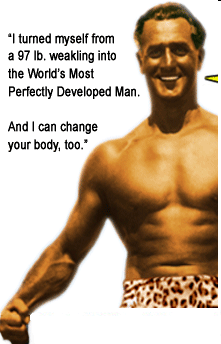
image Some of you may remember Charles Atlas, the original strongman who helped 97-pound weaklings stop getting sand kicked in their faces. Atlas began marketing his regimen back in 1922, and it is amazing how many of the principles are no different than they are today. Now, a few of these principles are really "out there". But, take a look at this article by a reporter who decided to resurrect this ancient fitness gospel.

My point of all this is to show that you do not need to be looking for a new "silver bullet" diet plan or exercise machine to improve your fitness. The principles that WORK have been around for a long time. If your program does not include the basic tenets of proven routines, you may want to rethink your approach.

Friday, August 22, 2008

Relax or ride the stress coaster?

There was a detailed study in the Journal of Sports Science and Medicine about the differences in how elite and non-elite performers deal with anxiety before competition. Their findings showed that non-elite performers tended to use relaxation techniques while elite performers embraced their anxiety and channeled it into their psychological preparation.

Before you read this study, I wanted to give you a few preparatory statements about the study:

  • It was specific to rugby, a high intensity, team-oriented sport
  • The study is highly technical, so scroll down to the very bottom and read the sections labeled Conclusions and Key Points
  • Elite and non-elite refer to levels of individual ability

The takeaway from this study is that you do not have to be an elite athlete to prepare like one. The findings show that the use of imagery and verbal self-persuasion are needed by all athletes to perform at a high level. In short, you should welcome the anxiety you feel before the big event and use it to better prepare yourself for the task ahead of you.

Wednesday, August 20, 2008

Model the best in the world

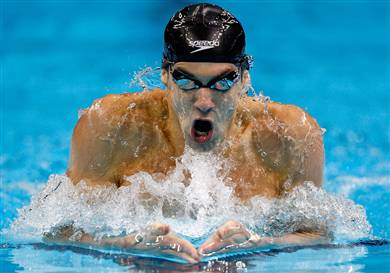
image People are always looking for a magic formula or hidden secret to becoming more fit, excelling in a sport or breaking their own personal best. Luckily, there are researchers, coaches, athletes and others who do nothing all day except try to find out how to enhance human performance to a level that has never been matched.

The Olympics is a great demonstration of this ongoing experiment. You may not be a fan of the badminton or table tennis, but you cannot deny the fact that every one of these athletes are better prepared--physically AND mentally--than anyone else in the world. Even things like table tennis count: everyone can play it, but not everyone can play it at that level.

No matter what the endeavor, if you want to be successful, model those that are considered the best. Some of them are gifted athletes that have genetics and technique that none of us could ever match. What we can take away from them is their work ethic, focus and the advice that they get from their coaches.

Read this article about how to perform more like an Olympic athlete. Some of the common themes I noticed from all of the recommendations:

  1. There is no need for fancy machines or exercises. A few cones, a jump rope or your own body weight will do.
  2. Changing it up is critical to long term success. You get stuck in a rut by refusing to vary your routine. Variables to change include time, speed, weight, volume, order, etc.
  3. Balance and form are essential to maximizing output and efficiency.
  4. Core muscle strength makes all the other muscles capable of performing better.
  5. Add power and reach to every stroke/stride instead of a greater volume of inefficient ones to make up for it.
  6. Proper stretching and preparation reduce injuries, decrease recovery times and improve performance.

It may not get you a free trip to London courtesy of the USOC, but might help you achieve a new personal record that you can try to break next month.